 LondonLifeBalance
UK Population Eating Patterns
Observational data showing typical eating habits, meal frequencies, and food choices across the United Kingdom.
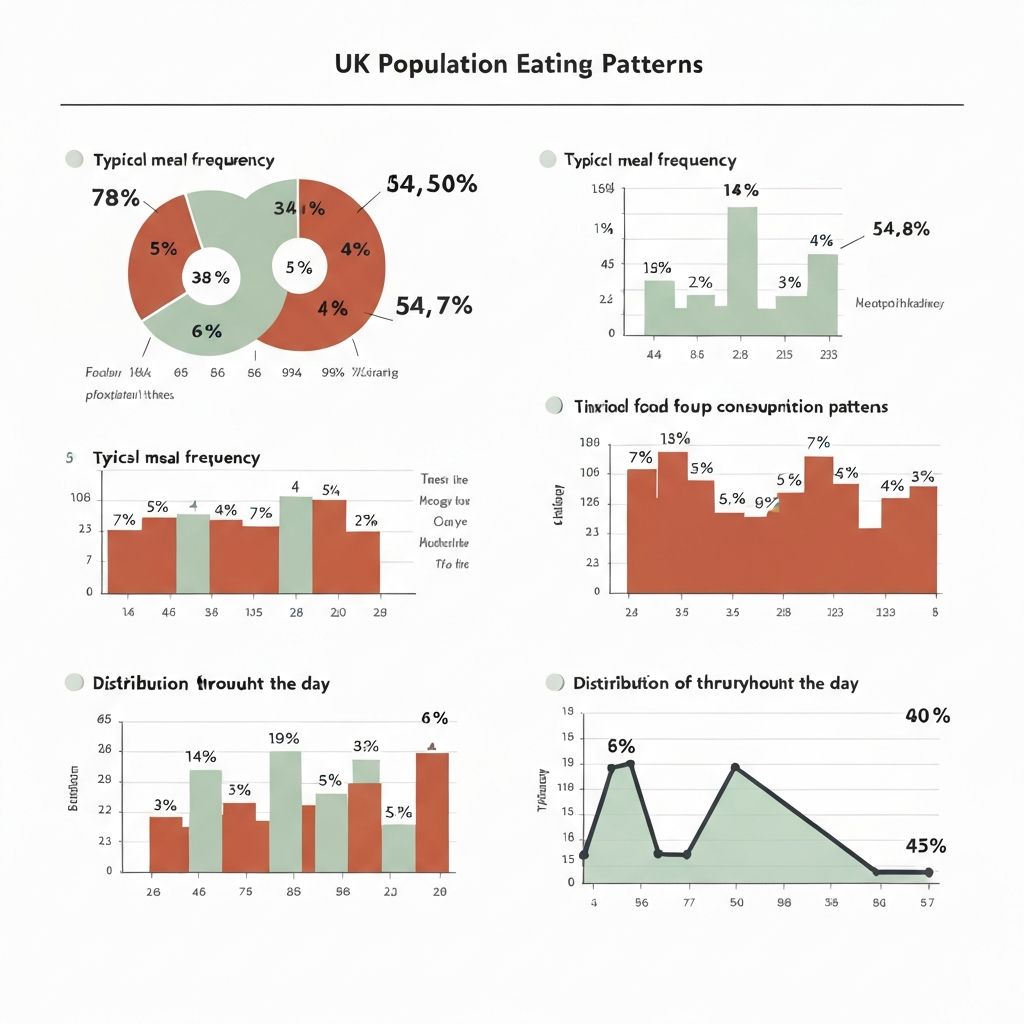
Understanding Population Patterns
Population-level data reveals interesting patterns in how people in the UK approach food and meals. These observations come from surveys, dietary studies, and food consumption tracking. While patterns exist at the population level, individual eating behaviours vary substantially from these averages.
Typical Meal Structure
Many UK households follow a traditional three-meal pattern: breakfast, lunch, and dinner, often with tea or snacks between meals. However, meal timing and frequency vary significantly between individuals based on work schedules, lifestyle, and personal preferences.
Breakfast consumption patterns show variation: some people eat substantial breakfasts, others prefer light options or skip breakfast entirely. Lunch times range from midday to afternoon, with packed lunches versus dining out showing different patterns across employment sectors and regions.
Common Food Preferences
Population data shows preferences for certain food groups. Bread and grain consumption is widespread, with variations between white and brown bread preferences. Vegetable and fruit intake shows considerable variation across demographics. Protein sources vary between meat-consuming, fish-consuming, and vegetarian populations.
Tea and coffee are standard hot beverages, with water consumption patterns varying widely. Alcohol consumption shows regional and demographic variations across the UK population.
Regional Variations
Food preferences and eating patterns show regional differences across the United Kingdom. Scottish, Welsh, Northern Irish, and English traditions show distinct influences on food choices. Urban and rural areas show different availability and consumption patterns for fresh versus processed foods.
Dietary Diversity
The UK population shows increasing dietary diversity reflecting immigration and cultural influences. Traditional UK fare coexists with Asian, Middle Eastern, Mediterranean, and other cuisine traditions. Individual food choices reflect cultural background, personal preference, economic factors, and availability.
Changing Patterns Over Time
UK eating patterns have evolved over decades. Processed food availability has increased. Restaurant and takeaway dining has become more common. Ready-meal consumption has grown. Vegetarian and vegan food options have expanded. These trends reflect changing lifestyles, economic factors, and social influences.
Important Context
Population-level observations provide context but don't apply uniformly to individuals. Your personal eating patterns may differ significantly from population averages. Individual factors including health status, food allergies, ethical choices, budget, cultural background, and personal preference all legitimately influence individual eating patterns.